

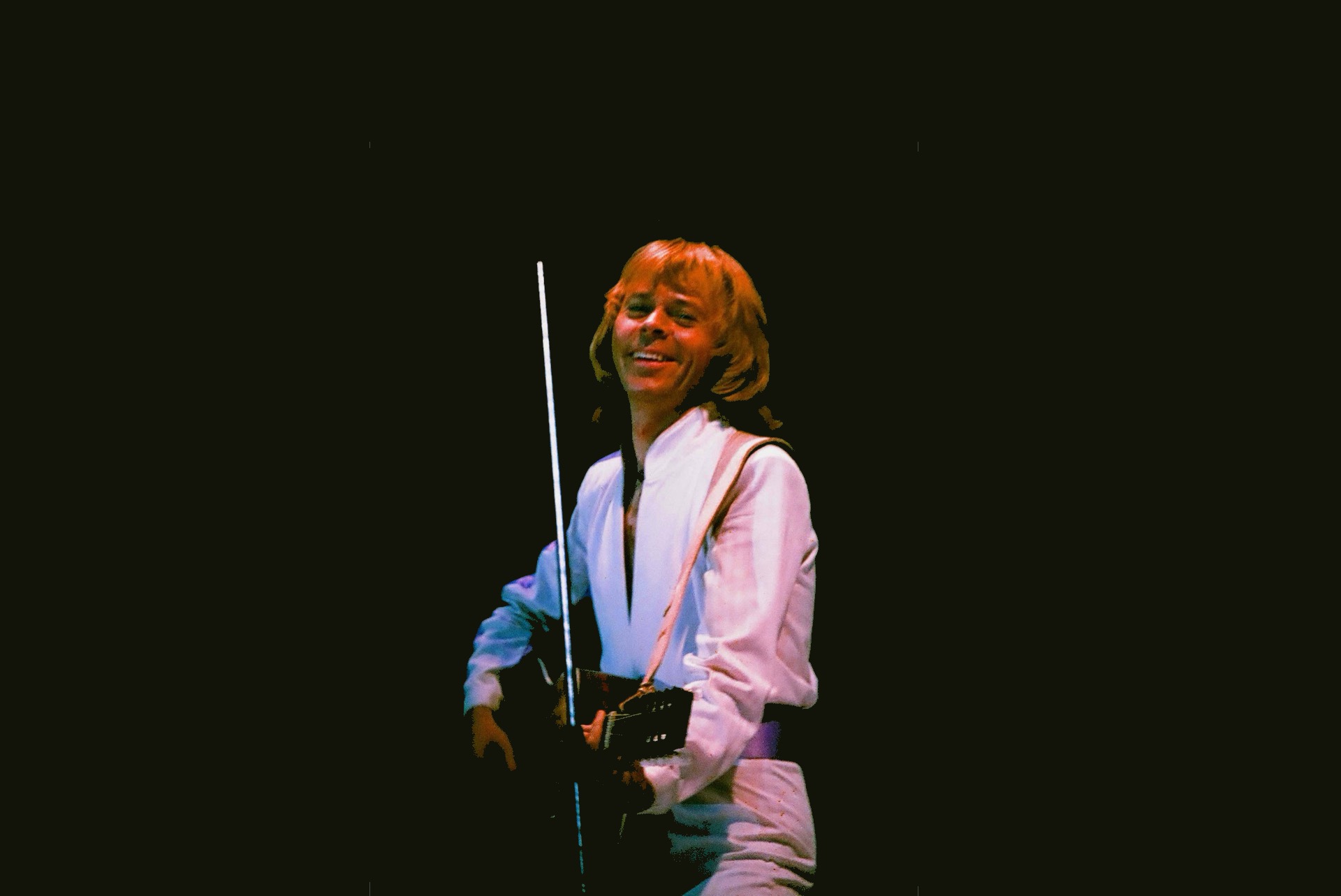
Ask a room full of ABBA fans to name their favourite Bjorn Ulvaeus songs and you quickly learn something lovely – nobody gives quite the same answer. One fan goes straight to the ache of The Winner Takes It All. Another picks the sparkle of Dancing Queen. Someone else champions a deeper cut because Bjorn’s writing, especially with Benny Andersson, was never only about the big singles. That is part of the joy. His songs carry melodies we can hum for decades, but they also hold sharp observations about love, regret, hope and human foolishness.
When we talk about Bjorn Ulvaeus songs, we are really talking about one of pop’s great songwriting catalogues. Not Bjorn alone in isolation, because ABBA’s magic was always built on collaboration, but Bjorn as a defining writer whose lyrical voice helped give the group its emotional clarity and wit. He could make a line feel conversational and devastating in the same breath. He could also turn a simple pop set-up into something theatrical, bittersweet or gently funny.
Why Bjorn Ulvaeus songs still feel so fresh
Plenty of hitmakers can produce a chorus. Fewer can create songs that still feel alive after fashions change, production dates a bit and whole generations come and go. Bjorn’s writing has endured because it was never just about chasing the hook, though ABBA had hooks to spare. It was about character, timing and emotional precision.
Listen closely to the lyrics across the catalogue and you hear a writer who understood point of view. Thank You for the Music is bright and direct, almost childlike in its gratitude. Knowing Me, Knowing You is cool and controlled, with heartbreak arriving in restrained phrases rather than grand speeches. One of Us captures the lonely aftermath of separation without fussing over itself. The feelings are big, but the wording is clean.
That matters more than ever. Pop can often become cluttered with over-explaining, but Bjorn’s songs usually trusted the listener to meet them halfway. He left space for us to bring our own history. That is one reason fans return to these tracks at different ages and hear new things each time.
The essential Bjorn Ulvaeus songs in ABBA
If you want a starting point, the obvious place is the ABBA years, because this is where Bjorn’s songwriting reached the widest audience and found its most iconic form. Yet even among the best-known hits, there is a remarkable range.
Dancing Queen deserves its status because it feels effortless while being incredibly well judged. The lyric is simple, but not empty. It catches a fleeting moment – youth, music, freedom, being seen – and lets the production do the floating. Bjorn knew not to overcomplicate it.
Mamma Mia shows his gift for playful frustration. The title line is irresistible, but the song works because the emotional situation is so recognisable. It is about losing your resolve and hating that fact even as you surrender to it. That push and pull runs through many of his best songs.
Then there is SOS, where the writing becomes more exposed. The chorus lands with urgency, but the verses are strikingly plainspoken. It sounds like somebody trying to hold a relationship together in real time. No grand poetry needed.
The Winner Takes It All is often treated as the ultimate ABBA heartbreak song, and fairly so. It is one of Bjorn’s sharpest lyrical achievements because it understands that separation is rarely tidy. The language of winners and losers, rules and judges, gives the pain a cold framework. That contrast is what makes it sting.
If you prefer ABBA with a bit more shadow, Eagle and The Day Before You Came show another side of the catalogue. Eagle reaches for escape and transcendence, while The Day Before You Came is all routine and emotional absence until the final shift in perspective changes everything. Bjorn could write joy, but he was equally good at unease.
Beyond the hits – the deeper cuts worth your time
For fans who already know the singles by heart, the more interesting question is which Bjorn Ulvaeus songs reveal something extra once you move past the obvious titles. This is where album tracks and less celebrated singles really reward close listening.
I’ve Been Waiting for You has that grand ABBA romantic sweep, but it also shows how good Bjorn was at balancing sincerity with structure. It builds beautifully without becoming overblown. If It Wasn’t for the Nights deserves more love as well. Beneath the polished surface is a very adult portrait of loneliness, with nightlife acting less like glamour and more like distraction.
Hole in Your Soul is another fascinating piece of writing. It is bigger, stranger and more frantic than the group’s most elegant pop moments, and that is exactly why some fans treasure it. It reveals Bjorn’s willingness to lean into theatricality and unrest rather than staying safely within the expected ABBA sound.
Move On, meanwhile, is often remembered for its spoken passage, but the lyric itself is full of warmth and reassurance. It is one of those songs that feels like a hand on the shoulder. Not every writer can pull that off without sounding sentimental.
That is the trade-off with a catalogue this rich. The biggest hits are unbeatable for instant recognition, but the deeper cuts often show the more adventurous or intimate side of the writing. For many fans, the real pleasure is letting both versions of Bjorn coexist.
Bjorn Ulvaeus songs outside ABBA
It would be unfair to limit Bjorn’s songwriting story to ABBA alone. His work with Benny stretched into musicals and projects that drew on folk, stage tradition and narrative storytelling in different ways. If ABBA gave us pop perfection, these later works often offered a broader dramatic canvas.
Chess is the obvious example. Songs such as I Know Him So Well and Anthem show how Bjorn’s lyrical instincts could adapt to character-driven writing without losing clarity. The emotions are bigger and the staging more overt, but the same precision remains. He still understood how to make a line land cleanly.
Kristina fran Duvemala is another important part of the picture, even if it is less familiar to casual English-speaking listeners. Here the writing becomes more rooted in story, migration and identity. It proves that Bjorn was never only a pop craftsman. He was also deeply interested in narrative and the lives songs could hold.
Earlier in his career, the Hootenanny Singers period matters too, though in a different way. Those recordings do not carry the same global profile as ABBA, but they help explain his grounding in melody, traditional forms and ensemble performance. For longtime fans, hearing that earlier context can make the later songs feel even richer.
What makes his lyrics distinct
Bjorn’s lyric writing is sometimes underrated because ABBA’s melodies are so immediate. People remember the chorus first, then only later notice how well the words are doing their job. His great strength was writing in clear, singable English while still sounding specific and emotionally believable.
That was no small feat. Writing pop lyrics in a second language can easily become stiff or awkward. Bjorn avoided that trap more often than not by favouring directness over ornament. He rarely tried to sound grand for the sake of it. He aimed for lines that could be sung naturally and understood instantly.
There was also humour in his work, though not always the wink-and-nudge sort. Sometimes it was dry observation. Sometimes it was the faint self-awareness in a character who knows they are making a mess of things. Take Does Your Mother Know. It is cheeky and light on the surface, but it is also tightly controlled storytelling.
And then there is his restraint. A Bjorn lyric often knows when to stop. That sounds simple, but it is one of the hardest skills in songwriting. He understood that a strong phrase repeated at the right moment can do more than a verse full of explanation.
Why fans keep returning to Bjorn Ulvaeus songs
Part of it is memory, of course. These songs are woven into family gatherings, car journeys, dance floors and solitary moments when one track says exactly what we could not quite put into words ourselves. But nostalgia alone does not sustain a catalogue for this long. The songs last because they are built well.
They also invite different kinds of listening. You can enjoy them casually and have a wonderful time. Or you can sit with the lyrics, compare album versions, follow the threads from one era to another and appreciate how Bjorn developed as a writer. That is one reason ABBA fans make such dedicated explorers. There is always another layer.
At ABBAradio.com, that is part of the pleasure too – not just hearing the classics again, but reconnecting with the craft behind them and giving the less obvious gems their moment in the light.
If you are choosing where to start, follow your mood rather than a checklist. Go to the glitter if you need lift, the heartbreak if you need honesty, the deeper cuts if you want surprise. The best Bjorn Ulvaeus songs have room for all of it, and that is why they keep meeting us wherever we are.
Post comments (0)