Early Career in Sweden (1966–1971)
By her mid-teens, Agnetha was already performing in local dance bands. She worked day jobs—including as a telephonist—while performing at night and composing.
When she was about 17, she wrote “Jag var så kär” (“I Was So in Love”), a song born out of a personal heartbreak (her split with boyfriend Björn Lilja). That song became her first single, released in late 1967, and it was a hit in Sweden.
Over the next few years, she released more Swedish-language songs and albums, many of which she penned herself. Her style was rooted in schlager pop and melodic ballads, and she also made attempts to break into the German market, even recording in German under the influence (and engagement) of a German producer, Dieter Zimmermann. That venture eventually fizzled out when she resisted altering her musical integrity.
Meeting Björn and the Formation of ABBA.
Agnetha met Björn Ulvaeus (of the Hootenanny Singers) in 1968, and their relationship developed over the following years. By 1971, they married (6 July in the small village of Verum), just before ABBA formally took shape. They had two children: daughter Linda Elin (born 1973) and son Peter Christian (born 1977).
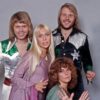
With Björn collaborating with Benny Andersson already, and with Anni-Frid Lyngstad also involved, the quartet that would become ABBA emerged. Agnetha, already a star in Sweden, brought her voice, songwriting ability, and experience to the new group. During the ABBA years, she sang many of the lead parts, contributing to defining songs like “The Winner Takes It All,” “SOS,” “Take a Chance on Me,” “When I Kissed the Teacher,” and more.
Life and Work During ABBA (1972–1982)
ABBA’s meteoric rise from Swedish pop stars to global icons happened through the 1970s and early 80s. Agnetha was deeply involved not only in performing but in the sensitive emotional texture of many ABBA songs. During this time, however, her personal life was closely intertwined with her public one. The strain of touring, media attention, and pressures of fame weighed heavily.
Her marriage to Björn began to falter in the late 1970s. They separated in 1978 and finally divorced in 1980. Though their marriage ended, they maintained professionalism in ABBA; the breakup, it is often said, inspired Björn’s lyrics for “The Winner Takes It All,” which remains among the band’s most emotionally raw songs.
Solo Career After ABBA (1982–1988)
When ABBA began its hiatus in the early 1980s, Agnetha returned to solo work. In 1983, she released Wrap Your Arms Around Me, her first solo album in English, which was well-received in Europe.
She followed this with Eyes of a Woman (1985) and I Stand Alone (1987). These albums showed her exploring a wider palette, sometimes more personal and quieter, sometimes attempting more adult contemporary styles. She also made forays into acting (notably in the Swedish film Raskenstam) and other musical collaborations.
During this period, she also balanced motherhood, and the demands on her by fame and public life made her increasingly private. Eventually, in the late 1980s, she stepped away from the limelight.
A Long Hiatus, Return, and Later Years (1990s–Present)
The 1990s for Agnetha were quiet in terms of public appearances. She lived more privately on Ekerö, near Stockholm. The deaths of her parents in the mid-1990s (her mother in 1994, her father in 1995) and her fear of flying are among the more personal challenges she has faced.
Then came a comeback: in 2004, she released My Colouring Book, a covers album that was greeted with warmth by fans and critics, and reminded the world of her distinctive voice.
In 2013, her album A became one of her most successful solo albums in the UK and elsewhere, featuring collaborations and new material.
More recently, ABBA reunited in a sense: in 2021 they released Voyage, their first studio album in 40 years, recorded between 2017 and 2021. Agnetha was part of that. In 2023 she released A+, continuing her more recent solo chapter.
The Relationship with Björn Ulvaeus & Its Impact.
Agnetha and Björn’s relationship has been one of the more prominent personal narratives connected to ABBA. Their romantic involvement predated ABBA; his musical collaboration with Benny Andersson and her solo success fed into the forming of the group. Marriage in 1971 coincided with ABBA taking off internationally.
By the late 70s, however, their marriage had deteriorated under multiple pressures—constant touring, public scrutiny, creative tensions. They separated in 1978 and divorced in 1980. Yet professionally, they continued working together in ABBA for a time, which many fans and critics have said added emotional complexity to some of the group’s later work. Songs like “The Winner Takes It All” have long been understood as reflections (at least in part) of the dissolution of their relationship.
Despite the end of their marriage, Agnetha and Björn remained public about putting ABBA’s work first. After the divorce, Agnetha stayed in Sweden, maintaining a level of privacy that contrasted with the band’s international exposure. She also later remarried (to a surgeon, Tomas Sonnenfeld, in 1990) but that marriage ended in 1993.
Private Life: Challenges, Retreats, and Resilience.
Agnetha has shared little publicly about her private life compared to many other artists, giving her an aura of mystery among fans. Still, certain points are well known:
- Family: Daughter Linda (born 1973) and son Peter (born 1977) are central to her life.
- Mental Health, Emotional Strain: The divorce with Björn affected her deeply. Over the years she has talked about needing therapy, for example to deal with fear of flying and to heal emotional wounds.
- Losses: The deaths of her mother and father in the 1990s were kept largely private and weighed on her.
- Privacy and Withdrawal: After her heavy years in the spotlight, Agnetha largely withdrew in the 1990s, limiting media exposure. She avoided interviews, rarely allowed cameras, and enjoyed a quieter life in Sweden. This seclusion helped her recharge but also added to her mystique.
What Makes Agnetha Special to ABBA Fans.
For many ABBA fans, Agnetha is unforgettable for several reasons:
- Her voice: A soprano with clarity, emotional nuance, vulnerability and power. Her voice could deliver pop delights, ballads of heartbreak, cheeky tunes, and harmonies so clean. Her presence in songs is often the emotional core.
- Songwriting & early solo work: Before she was world famous via ABBA, she was already writing her own songs, in Swedish, with genuine feeling. Fans often go back to those early solo albums and singles and see a different side of her, one less filtered, more personal.
- Balancing personal pain with public performance: The fact that she carried on singing—even after her marriage broke down, under tremendous pressure of fame—speaks to strength. Many ABBA songs feel more poignant when you know a bit of what she and Björn were going through.
- Her comeback and quiet dignity: Despite years away from the stage, her later solo work was well-received. Things like My Colouring Book, A, and later A+ show that her voice matured but still carries that unique timbre fans love. Also, her retreat from fame seems to come from a place of needing rest and privacy, not bitterness.
Conclusion.
Agnetha Fältskog’s journey is one of both triumph and challenge. Pre-ABBA, she was already proving herself a gifted songwriter and performer; with ABBA she became part of a global phenomenon; after ABBA, she chose both artistic exploration and, eventually, withdrawal from public life. Her relationship with Björn Ulvaeus is part of her story—not always easy, deeply human, and richly reflected in the music many of us love.
For ABBA fans, revisiting Agnetha’s solo records, reading her interviews, hearing her later albums, or even watching home videos and rare appearances is a way of seeing her whole self—not just as one of the great voices of pop, but as a woman who lived through love, loss, joy, and resilience.
Agnetha once said that she didn’t always know where music would take her, but fans now know that where it has taken her is something powerful: a legacy of melody, feeling, and an astonishing voice that remains unforgettable.


 play_arrow
 play_arrow
 play_arrow
 play_arrow
 play_arrow





 Carl Magnus Palm | ABBA RSS