Before ABBA: Growing into a Singer (1958–1971)
From her early teens, Frida sang with dance bands and in local performances. At age 13, she joined the Evald Ek Orchestra—a dance band—which gave her early stage-experience.
She moved toward a career in Swedish pop and schlager music, recording singles and doing television appearances. A turning point came in September 1967, when she won the Swedish talent & singing competition New Faces (“Barnens Dag” / Barnens Dag contest), performing “En ledig dag” (“A Day Off”). That success led to television exposure (on Hylands Hörna) and her first contract with EMI.
Over those early years she released several singles and built a solo presence in Sweden. In 1969, she participated in Melodifestivalen (the Swedish selection for Eurovision) with “Härlig är vår jord” (“Our Earth Is Wonderful”) and came in fourth.
Also, as her career grew, she moved to Stockholm to focus on singing more seriously. A notable early album is Frida (1971), produced by Benny Andersson (who was by then her partner), and released on EMI/Columbia. It received positive reviews, especially about her voice, precision, versatility.
Joining ABBA & Her Role Through the Golden Years (1972–1982).
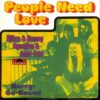
By the early 1970s, Benny Andersson and Björn Ulvaeus were collaborating, Agnetha Fältskog was also active, and the four singers and musicians came together—in time becoming “Björn & Benny, Agnetha & Frida,” later ABBA.
Frida’s distinct voice, often described as mezzo-soprano with warmth and emotional depth, formed a contrast and complement to Agnetha’s soprano.
During ABBA’s years of meteoric success, Frida sang lead or prominent solo parts on many of the group’s most beloved songs: “Fernando,” “Money, Money, Money,” “Knowing Me, Knowing You,” “The Name of the Game,” “Andante, Andante,” among others. Her ability to convey mood—whether wistful, theatrical, introspective—added much of ABBA’s emotional texture.
While still in ABBA, she also maintained solo activity. In 1975 she released Frida ensam (“Frida Alone”), a Swedish-language solo album. The project included covers of international songs (e.g. Beach Boys, David Bowie) and a Swedish version of “Fernando”. It was recorded in between ABBA sessions and was very successful in Sweden—topping charts, staying many weeks, achieving both commercial success and critical praise.
Frida’s role in ABBA also involved more than singing: she was part of the image, the performance, and the group’s public identity. Her being more outgoing with audiences and more comfortable in spotlight moments distinguished her. The band’s shared fame also placed pressure on personal relationships and private lives.
Solo Career After ABBA & Later musical projects.
When ABBA paused activity (formally ended in the early 1980s), Frida embarked on an international solo career. Her first English solo album Something’s Going On came out in 1982. Produced by Phil Collins, it featured the single “I Know There’s Something Going On,” which enjoyed considerable success in many countries (Belgium, Switzerland, Australia, etc.), and even reached the U.S. Top 20. The sound was more rock/pop oriented, a departure from ABBA’s glittery pop.
In 1984, Frida released Shine, another English solo album; though it did not match the commercial heights of Something’s Going On, it solidified her profile as a solo artist with her own style and ambitions. She continued to sing in Swedish too; in 1996 she released Djupa andetag (“Deep Breaths”), which was very well received in Sweden.
Outside of full albums she did a few collaborations (duets), charity recordings (for environmental causes), occasional performances. Her last full solo studio album was Djupa andetag, after which her music-output slowed. She also compiled and released retrospectives: Frida 1967-1972 (1997) collected her pre-ABBA solo material.
Personal Life: Relationships, Identity & Later Years.
Frida’s personal life has been deeply intertwined with her public work, sometimes in challenging ways.
- Marriages & Relationships: At age 18 (in 1964), she married Ragnar Fredriksson, a musician/salesman. They had two children. The marriage ended in 1968 (divorced formally in 1970) before ABBA’s fame fully took off.
- She met Benny Andersson in ~1969. They became engaged, and later married in October 6, 1978, in the midst of ABBA’s global success. Their marriage lasted until they separated in 1980, with divorce in 1981.
- In 1992, she married Heinrich Ruzzo Prinz Reuss von Plauen, a German prince/landscape architect. Through this marriage she became Princess Anni-Frid of Reuss, Countess of Plauen. They lived together for some years; sadly, he died in 1999.
- Identity, family background & connection to her father: For much of her life, Frida believed her father had died during the war; only later, after a German magazine published a biography in 1977, did she learn he was alive. They met thereafter.
- Private personality & later life: Over the decades, Frida has grown more private. After her husband’s death in 1999, she withdrew somewhat from public life. She has lived in Switzerland, spent time pursuing nature, environmental causes, charity, and has accepted invitations for special appearances but avoided continuous public spotlight.
She has also been involved in environmental activism, founded or supported charities connected to children and ecology, and taken roles in arts and culture beyond just music.
The Legacy & What Makes Frida Special for ABBA Fans
For ABBA fans, Anni-Frid Lyngstad (Frida) is beloved for many reasons. Here are some of the qualities that make her stand out:
- Distinct Vocal Color: Frida’s voice combines warmth, richness, expressiveness. She can handle dramatic, soulful, balladic, and pop-oriented tunes. Songs like “Fernando” or “Knowing Me, Knowing You” showcase her emotional range, while others allow her to soar with power or to deliver subtle nuance.
- Emotional Depth & Authenticity: Knowing Frida’s early life—loss, identity struggles, emotional weight—and seeing how some of that seeps into her solo work and ABBA songs gives extra layering to her performances. Fans often feel that her best work carries more than pop gloss—it carries feeling.
- Versatility: She worked in Swedish and English, in solo and collaborative contexts, in pop, schlager, jazz influences, covers, environmental and charitable ventures. Her solo albums, especially Something’s Going On, show willingness to grow, take risks, explore different sounds.
- Grace under Pressure: The public eye, ABBA’s pressures, personal losses—yet she navigated them without major scandal, maintaining dignity. Her marriage, divorces, loss, all in public to some degree, yet she often maintained privacy, coherence, and strength.
- Mystique & Later Reflections: As Frida stepped back, as she aged and turned to reflection, retrospectives, special performances rather than continuous touring, she built an aura of the songstress who does not need constant applause but whose voice remains deeply felt among fans. Her contributions to ABBA’s reunion recordings (I Still Have Faith in You, etc.) are poignant because they come after years of silence, reminding listeners just how much her voice, presence, matters.
Frida After ABBA: Later Appearances, Reunion & What Fans Should Revisit
Though Frida’s main era of musical output slowed after the 1990s, she left behind a solo catalog that’s well worth revisiting for any fan:
- Listen to Something’s Going On to hear her enter the post-ABBA world with confidence.
- Shine (1984) shows her experimenting, though with different reception.
- Djupa andetag (1996) returns to Swedish and conveys maturity, reflection, and melodic depth.
- The compilation Frida 1967–1972 lets fans hear her earliest work—her growth into the singer she became.
In recent years, her public appearances have been carefully chosen: the opening of ABBA The Museum in Stockholm, special single releases (such as 1865), appearances tied to charity or environmental causes. In the more recent ABBA reunion and Voyage project, Frida is part of the return, lending her voice once again with full recognition of her place in ABBA’s story.
Reflections & Conclusion.
Anni-Frid Lyngstad’s story is one of resilience, artistry, and evolution. Starting from a childhood marked by loss and complexity, she found strength and voice in music. In ABBA she was one of the four pillars of one of pop music’s greatest phenomena.
After ABBA, she didn’t always chase chart success; she charted meaning. Her solo work, especially Something’s Going On, remains important not just as a post-ABBA effort but as Frida’s statement of independence and identity.
For fans, exploring Frida’s career is rewarding not just for the hits, but for the lesser known moments: early recordings in Swedish, choir-like harmonies, solo Swedish albums, deep reflections in later years. Her ability to transform personal history into artistry, and to emerge graceful, is part of what makes her a beloved figure.
In the tapestry of ABBA, Frida’s voice is that touch of depth, warmth, and dramatic color. Whether she’s delivering a ballad, sharing harmonies, or stepping into the spotlight alone, she defines much of what makes ABBA more than just pop hits—it’s emotional richness, human stories, and music that endures.


 play_arrow
 play_arrow
 play_arrow
 play_arrow
 play_arrow




 Carl Magnus Palm | ABBA RSS