

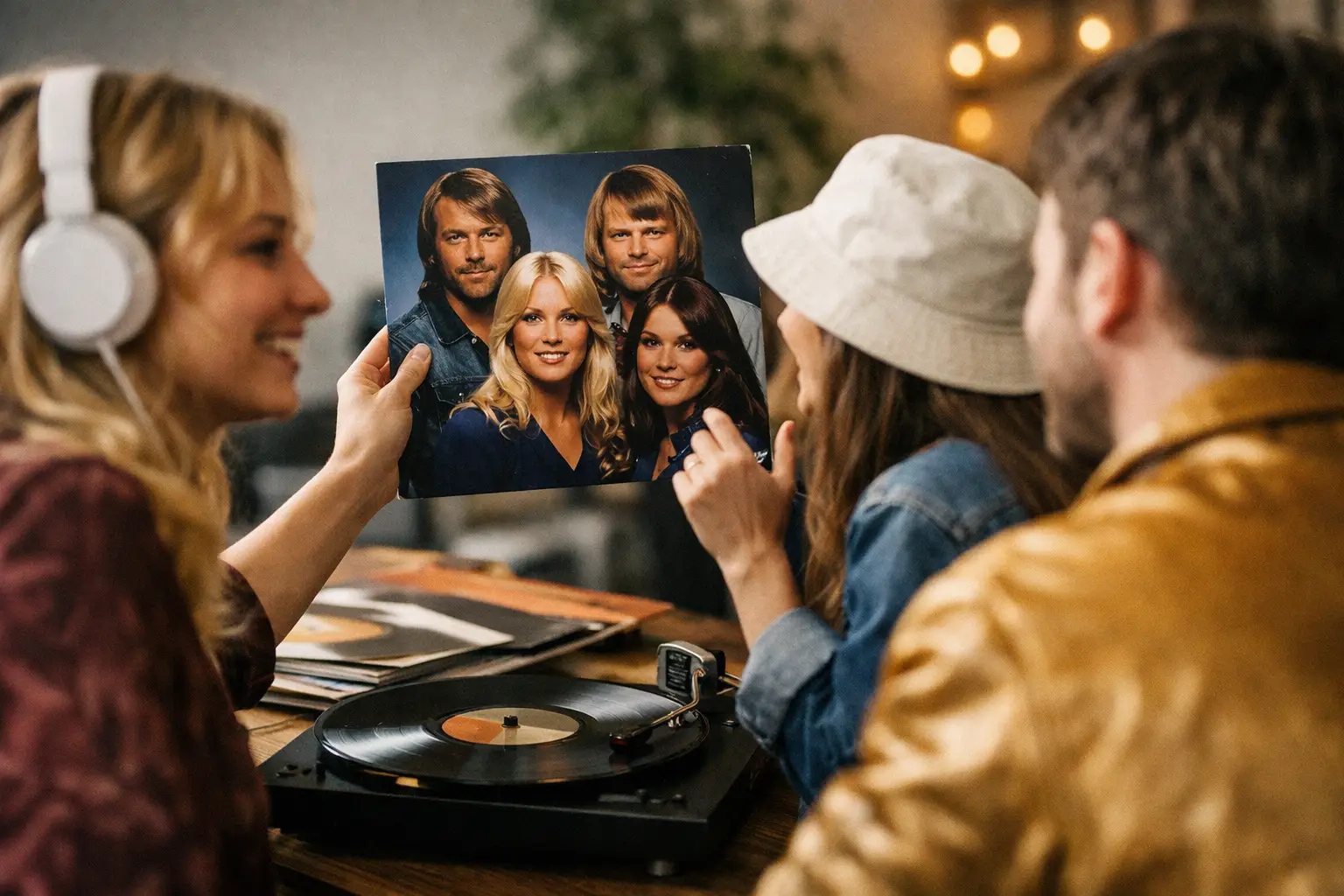
There is a particular joy in turning over an ABBA single. The A-side may be the song that filled the dancefloor, topped the chart or became part of family life, but the flip can hold a different kind of treasure: a strange little experiment, a burst of pure pop, or a song too bruised and beautiful to fit neatly into the hit parade. These most underrated ABBA B-sides remind us just how much care Björn and Benny put into the songs that many listeners only found years later.
A small note for collectors: B-side pairings could differ between territories and reissues, so your cherished vinyl copy may tell a slightly different story. That only adds to the fascination. These are not merely leftovers. In several cases, they are among ABBA’s most revealing recordings.
Why ABBA’s B-sides deserve their own spotlight
For a group known for immaculate singles, ABBA’s B-sides had an unfair task. They followed songs such as “Dancing Queen”, “The Winner Takes It All” and “The Day Before You Came” – records so substantial that almost anything beside them risked being overlooked.
Yet the flips often gave the group room to be less predictable. There is more wit, more melancholy and, occasionally, more musical risk. Some began life as album tracks, others were made specifically for a single, but all benefit from being heard away from the shadow of the A-side. Put them on after the familiar favourites and let the music take you somewhere less expected.
9 most underrated ABBA B-sides
1. “Crazy World”
Released on the flip of “Money, Money, Money”, “Crazy World” feels like a late-night conversation after the brighter song has ended. Agnetha’s vocal has a tender, slightly weary quality, and the arrangement moves with unhurried elegance rather than the theatrical punch of its famous companion.
The lyric is full of longing for a quieter, kinder life – a theme ABBA returned to often, but rarely with this much softness. It is not an obvious singalong, and that may be exactly why it has endured with fans who like their ABBA bittersweet.
2. “Happy Hawaii”
“Happy Hawaii”, the B-side to “Knowing Me, Knowing You”, is a glorious example of ABBA refusing to waste a good melody. It is an early English-language version of “Why Did It Have to Be Me”, recast as a sunlit holiday postcard.
The contrast is fascinating. Where the finished album track became a grittier, bluesier character piece, “Happy Hawaii” is all bright harmonies, warm weather and a touch of escapist camp. It is lighter than its later incarnation, certainly, but it is also enormous fun. For fans who enjoy hearing the group’s songwriting process in motion, this is essential listening.
3. “The King Has Lost His Crown”
Paired with “Gimme! Gimme! Gimme! (A Man After Midnight)” in several markets, “The King Has Lost His Crown” takes us far from the disco pulse of the A-side. Its slippery rhythm, dramatic piano and regal metaphor create something properly unsettling.
Frida sings the central image with cool authority, while the backing vocals seem to gather around her like a courtroom whisper. The song is a reminder that ABBA could make sophisticated pop without announcing its sophistication. It does not demand attention in the way “Gimme! Gimme! Gimme!” does. Give it attention anyway.
4. “Lovelight”
The B-side of “Chiquitita”, “Lovelight” is one of those recordings that can make a fan ask, with genuine disbelief, why it was not a bigger part of the ABBA story. It has a restless beat, a polished wall of vocals and an arrangement that keeps unfolding with each listen.
Its lyric is yearning but not defeated. The singers are reaching for connection, for that flash of recognition in another person’s eyes. “Lovelight” is an especially rewarding choice for anyone who thinks the group’s late 1970s work begins and ends with the major hits.
5. “Elaine”
“Elaine”, which appeared behind “The Winner Takes It All”, could hardly be more different from the single it accompanied. The A-side is intimate devastation. “Elaine” is urgent, theatrical and driven by a rhythm that feels as though it is racing through the song.
Agnetha and Frida deliver the tale of a woman on the edge with real force, and the production has that unmistakable Super Trouper-era sheen: crisp, layered and slightly anxious beneath its pop surface. It may be too intense to have worked as a global radio smash, but as a B-side it is wonderfully fearless.
6. “Should I Laugh or Cry”
This was the B-side to “One of Us” in the UK, and it deserves far more than a footnote in the final chapter of ABBA’s original run. “Should I Laugh or Cry” has a mature, almost adult-contemporary polish, but there is no shortage of emotional tension beneath it.
The title captures the song’s central dilemma perfectly: when a relationship is dissolving, is the right response pain, anger or numb amusement? Agnetha handles that uncertainty beautifully. Fans drawn to the reflective atmosphere of The Visitors will find much to love here.
7. “Cassandra”
If one song belongs at the top of any list of most underrated ABBA B-sides, it may be “Cassandra”. Released with “The Day Before You Came”, it draws on the tragic figure from Greek mythology, cursed to foresee disaster but never be believed.
That sounds grand on paper, and it is grand in sound too. Yet ABBA never let the arrangement become ponderous. The track is poised, melodic and full of an aching sense of inevitability, with Frida in magnificent form. It is not casual background listening. Put it on when you have time to sit with it, preferably with the volume a little higher than usual.
8. “You Owe Me One”
The flip side of “Under Attack” is an oddity, and that is its charm. “You Owe Me One” has a playful, almost jazzy bounce, with a vocal performance that feels knowingly off-centre after the polish of ABBA’s biggest singles.
Not every fan will rank it alongside “Cassandra” or “The Day Before You Came”. That is fair. But it shows another side of the group: amused, experimental and still willing to try a new angle at the end of their recording career. Sometimes an underrated song is not the prettiest one. Sometimes it is the one that proves the artist was still curious.
9. “The Piper”
“The Piper” appeared as the B-side of “Super Trouper” in a number of territories, and its dark atmosphere makes it one of the boldest choices in ABBA’s catalogue. The marching rhythm and choral vocal writing create an uneasy, almost folk-horror mood.
The song’s warning about following a charismatic leader has a weight that feels striking even now. It is not a cosy listen, nor is it meant to be. But its sense of scale, with the voices rising around that persistent beat, is thrilling. For anyone who only knows ABBA as a source of glitterball joy, “The Piper” offers a compelling correction.
Hear the flips with fresh ears
The best way to enjoy these songs is not to treat them as homework after the hits. Build a little listening session around them. Start with the gleaming pop of “Happy Hawaii” and “Lovelight”, then move into “Crazy World”, “Elaine” and “Cassandra” as the mood deepens. The sequence makes clear that ABBA’s so-called lesser-known material was never lesser in craft.
At ABBAradio.com, that spirit of discovery is part of the magic: a familiar favourite can be followed by a rarity that sends you back to the records with fresh ears. So next time you reach for “Dancing Queen” or “Waterloo”, stay for the other side. Somewhere behind the label, another ABBA world is waiting to make you smile.
Post comments (0)